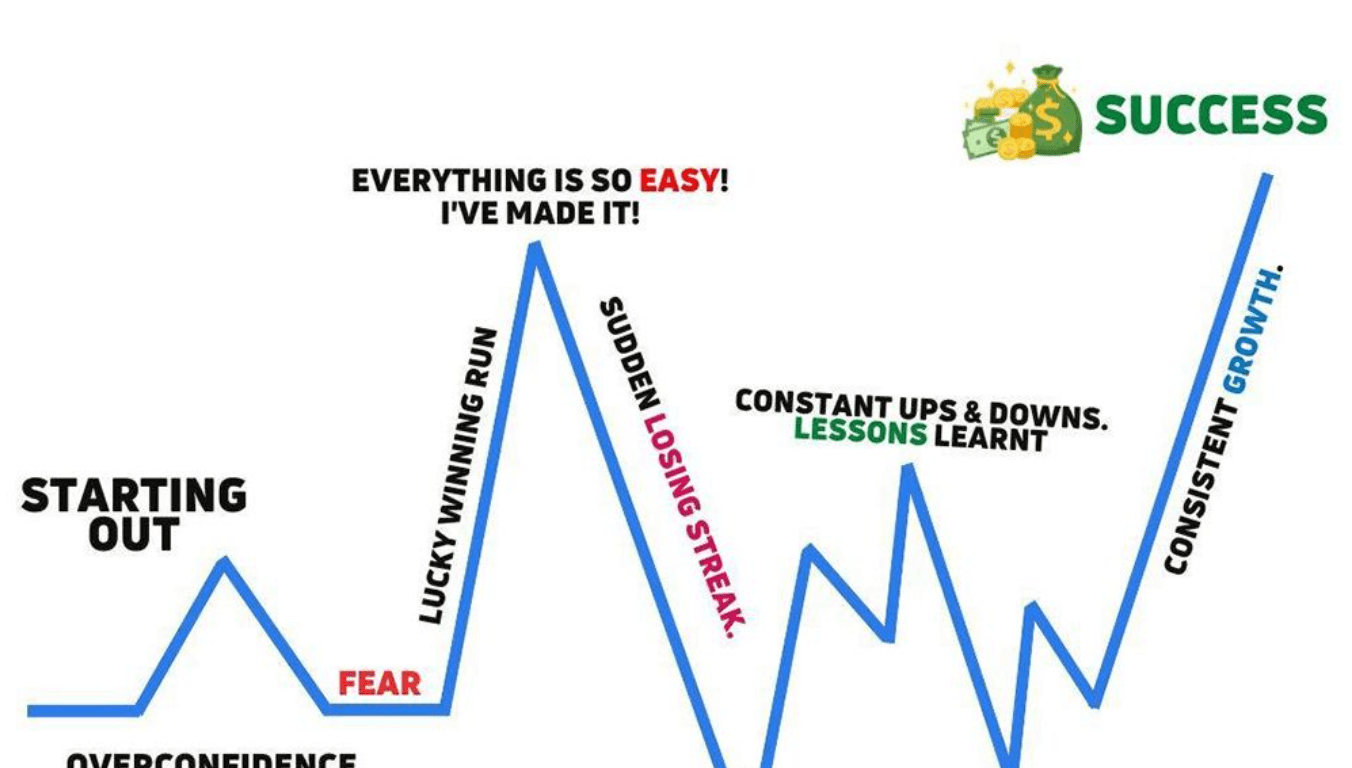
As a product manager, understanding the emotional and practical journey of a trader is crucial to building tools that not only attract users but also retain them by providing real value at every stage of their development. Trading isn’t just a series of transactions—it’s a psychological journey filled with highs and lows, moments of overconfidence, and crushing doubt. By recognizing these stages and addressing the pain points that arise, we can design a product that supports traders every step of the way.
Let’s break down the trader’s journey and explore how we can tailor our product to meet their needs, all while creating sustainable economic models.
1. Starting Out & Overconfidence: Building a Solid Foundation
User Pain Points:
- Overconfidence without experience.
- A shallow understanding of market dynamics.
Product Solutions:
- Structured Educational Modules: Develop a series of gamified learning paths that guide new traders through the fundamentals of trading, market analysis, and risk management. These modules should be interactive, with quizzes, video tutorials, and practical exercises.
- Demo Trading Accounts: Offer a feature that allows users to trade with virtual money, providing a risk-free environment to apply their learning and build confidence.
Economic Model:
- Freemium Model: Offer the basic educational content for free to attract new users. Charge for access to advanced courses, expert webinars, and premium content.
- Ad-supported Content: Incorporate non-intrusive ads within the free educational material, with an option to remove ads through a one-time payment or subscription.
2. Fear: Addressing Emotional and Risk Concerns
User Pain Points:
- Fear of losing money.
- Hesitation and indecision in making trades.
Product Solutions:
- Psychology Coaching Content: Create a library of content focused on the psychology of trading, emphasizing emotional control, stress management, and decision-making under pressure.
- Risk Assessment Tools: Introduce tools that help users assess the risk level of potential trades based on their trading history, market conditions, and personal risk tolerance.
Economic Model:
- Subscription Model: Offer tiered subscription plans that include access to psychology coaching content, personalized risk assessments, and other premium features.
- Partnerships: Partner with financial services or insurance providers to offer products like trade insurance, where users can pay a small fee to hedge against significant losses.
3. The Lucky Winning Run: Reinforcing Positive Habits
User Pain Points:
- Overconfidence after initial successes.
- Lack of awareness about the role of luck versus skill.
Product Solutions:
- Performance Analytics: Provide detailed analytics that break down a trader’s performance, distinguishing between skill-based success and lucky breaks. Highlight patterns that indicate overconfidence or risky behavior.
- Community Engagement: Build a community platform where traders can share their experiences, learn from each other, and stay grounded by discussing their strategies and outcomes.
Economic Model:
- In-App Purchases: Charge for access to advanced analytics reports or in-depth performance reviews.
- Affiliate and Referral Programs: Offer premium features or discounts for users who refer friends to the platform or share their success stories on social media.
4. Sudden Losing Streak: Offering Support During Downturns
User Pain Points:
- Frustration and demotivation after losses.
- The temptation to abandon trading altogether.
Product Solutions:
- Mentorship Programs: Introduce a mentorship feature that connects less experienced traders with seasoned professionals. Mentors can provide personalized advice, share their experiences, and offer support during tough times.
- Emotional Support Tools: Implement features like guided meditations, stress-relief exercises, and content specifically designed to help traders deal with loss and avoid burnout.
Economic Model:
- Pay-per-Session: Offer mentorship sessions on a pay-per-use basis, with different pricing tiers based on the mentor’s experience and expertise.
- Subscription Bundles: Include access to emotional support tools and mentorship programs in premium subscription packages.
5. Panic: Automating Control and Stability
User Pain Points:
- Panic-driven decision-making during market volatility.
- Sudden, significant losses due to poor trade execution.
Product Solutions:
- Automated Trading Alerts: Develop a feature that sends real-time alerts during periods of high volatility, suggesting appropriate actions such as holding, exiting, or entering positions based on predefined criteria.
- Stop-Loss Automation: Introduce automated stop-loss features that execute trades when a certain loss threshold is reached, helping traders minimize losses and maintain discipline.
Economic Model:
- Transaction-Based Fees: Implement a small fee for executing automated trades or receiving premium alerts, creating a revenue stream directly tied to user activity.
- Premium Alerts Package: Offer basic alerts for free, with more advanced, customizable alert systems available through a subscription or one-time purchase.
6. Constant Ups & Downs: Facilitating Strategic Adjustments
User Pain Points:
- Inconsistent trading performance.
- Difficulty in identifying and maintaining a successful strategy.
Product Solutions:
- Strategy Builder and Optimizer: Offer a tool that allows users to create, test, and optimize their trading strategies using historical market data. Include features that suggest adjustments based on current market conditions and past performance.
- Progress Tracking: Implement a feature that tracks a trader’s progress over time, providing insights into their trading habits, successes, and areas for improvement.
Economic Model:
- Marketplace for Strategies: Create a marketplace where users can buy, sell, or share trading strategies. The platform can take a percentage of each transaction.
- Premium Analytics: Charge for access to advanced backtesting tools, strategy optimizers, and detailed progress reports as part of a premium subscription.
7. Mastering Yourself: Encouraging Discipline and Consistency
User Pain Points:
- Maintaining discipline over the long term.
- Challenges in developing a consistent, effective trading plan.
Product Solutions:
- Personalized Trading Plans: Develop a feature that creates customized trading plans for users based on their goals, risk tolerance, and trading history. This plan should be dynamic, adjusting as the user’s experience and market conditions evolve.
- Regular Review Sessions: Offer daily, weekly, or monthly review sessions where users can reflect on their trades, analyze what worked and what didn’t, and make necessary adjustments to their strategy.
Economic Model:
- Consulting Services: Offer one-on-one consulting sessions where experts help users build and refine their trading plans. These could be priced as premium services.
- Tiered Subscriptions: Provide different levels of access to personalized tools and review sessions, with higher tiers offering more in-depth support and customization options.
8. Consistent Growth & Success: Scaling and Sustaining Success
User Pain Points:
- Risk of complacency after achieving consistent success.
- Need for continuous learning and adaptation.
Product Solutions:
- Advanced Trading Tools: Introduce sophisticated tools for experienced traders, such as AI-driven market analysis, predictive modeling, or access to exclusive market data and insights.
- Continuous Learning Modules: Offer advanced learning paths that cover new markets, asset classes, and trading techniques, keeping users engaged and improving their skills.
Economic Model:
- Premium Membership: Offer a high-tier membership that includes access to cutting-edge tools, exclusive data, and advanced educational content.
- Profit-Sharing Programs: Develop a model where users can invest alongside the platform in high-potential opportunities, sharing profits and incentivizing platform use.
Conclusion: Building a Comprehensive Ecosystem
As a product manager, your goal is to create a trading platform that not only attracts users but also supports them throughout their journey. By addressing the unique pain points at each stage of a trader’s development and offering tailored solutions, you can build a product that becomes an indispensable tool in their trading arsenal.
Integrating these features with robust economic models ensures that the platform is both profitable and sustainable, all while delivering real value to users. The result? A thriving community of traders who are not just surviving the rollercoaster ride of the markets but mastering it.

 Aaron Mai